21 September 2022
Taxation Lawyers in Japan
Our taxation lawyers in Japan explain how companies and individuals are taxed, including residence-based rules, and offer tax advice to investors.
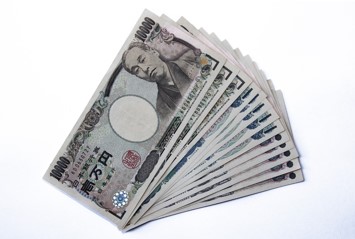
Taxation in Japan applies to income derived from business activities, investment income as well as employment income, income from pensions, income from immovable property and other types of derived profits. The basis for taxation is residence: residents are taxed on their worldwide income (non-permanent residents with some limits), while for non-residents and foreign companies only the profits derived from the country are the ones being taxed for both companies and individuals.
Our taxation lawyers in Japan describe the main characteristics of the taxation system, the values of the taxes on corporate and personal income. Investors, entrepreneurs and foreign individuals who are living and working in Japan can find out more about the Corporation Tax Act, the Income Tax Act or the Act on Special Measures Concerning Taxation from our team of experts.
The National Tax Agency, or NTA, is the main authority for taxation purposes in the country and our team of specialized lawyers can help foreign individuals in all communications and submissions needed with this entity.
Corporate taxation in Japan
The basis for corporate taxation in Japan is residence: a legal entity, be it a limited liability company or a joint stock company, is a tax resident when its main office is located in the country. For taxation purposes, there is no need for the company’s management to also be a local one. A resident company is taxed on its worldwide income while a foreign company that has a permanent establishment in the country, such as a branch, is taxed on the income derived by that branch from Japan.
The main taxes for companies are the following:
- the corporate tax: the national rate is 23.2% (15% on the first JPY 8 million of income for companies with capital of JPY 100 million or less); with local taxes the effective rate is about 31.5% in Tokyo for large companies, and the rate is the same for branches of foreign companies in Japan.
- the capital gains tax: there is no separate capital gains tax for companies; capital gains are usually treated as regular income for tax purposes.
- the withholding tax: in dividends, interest, and royalties, at a value of 15% or 20% to which a surtax of 2.1% applies.
- the social security contribution: this is a tax with a value of approximately 16.28% for the company.
- real estate taxes: applicable upon the acquisition and the registration of real estate, they can vary.
- inhabitant’s tax: this varies according to the location where the company is based and its size.
- other taxes: the defense special corporate tax (4% of the corporate tax amount after a JPY 5 million deduction, for fiscal years beginning on or after 1 April 2026), the stamp duty, the consumption tax, the fixed asset tax as well as the business premises tax are examples of other taxes for companies.
One of our taxation lawyers in Japan can give you more information about these taxes as well as the double tax treaties signed by Japan, which cover more than 150 jurisdictions worldwide.
Corporate tax compliance in Japan
The tax year can be the same as the calendar year or another chosen twelve-month period, but no longer than that. For branches in Japan, the tax year will usually be the same as the tax year of the head office.
The annual tax return is filed for the corporate income tax, the inhabitant’s tax, and the enterprise tax. The payable taxes are due within two months from the date the company closes its fiscal year.
There are two types of tax returns for companies in Japan: the blue one which has a number of benefits including accelerated depreciation and the white return. One of our taxation lawyers in Japan can help you apply for a blue return before the start of the fiscal year.
Personal taxation in Japan
For taxation purposes, an individual is a tax resident in Japan if he has a domicile (jusho) in Japan or has had a residence (kyosho) in the country for one year or more. Non-Permanent resident status is also possible when the individuals is a foreign national who has been living in Japan for five years or less during the last 10 years. Permanent residents are taxed on their worldwide income while nonpermanent residents on their Japanese sourced income and on the foreign income that is paid or remitted in the country. Non-residents are only taxed on the income derived from Japan.
Japan has progressive national income tax rates from 5% to 45% (up to 55% including the 10% local inhabitant's tax) and with a 2.1% surtax for the purpose of recovery after the 2011 earthquake. Other taxes on individuals include the stamp duty, the real property tax, the inheritance or estate tax and social security.
Personal taxation compliance in Japan
For individuals, the tax year is the same as the calendar year and employment income as well as investment income is withheld at source. Individuals who derive inform from self-employment must file a final income tax return (kakutei shinkoku) for the calendar year, generally between 16 February and 15 March of the following year.
Our team of taxation lawyers in Japan can give you more information about the tax regime in the country, how the inhabitant’s tax applies, as well as the applicability of the consumption tax, the Japanese equivalent of the VAT with a standard rate of 10% (8% reduced rate for food and beverages and newspaper subscriptions).
Contact our law firm in Japan for complete assistance in all tax matters.